

Crack detection ILI campaigns can be extremely time consuming and expensive. Although these campaigns will have been subject to detailed planning, given the number of variables at play, this is no guarantee that the tool will run perfectly. As crack-detection ILI technology performance is highly sensitive to the associated inspection conditions, it is essential to understand where in the line run-conditions may not have been optimal, and how this potentially impacts its performance with respect to the target integrity threat(s). Appraising the impact of run performance on data quality is central to industry crack-management best-practice API 1176. It is also part of the ILI verification process contained in API 1163, associated with ensuring an ILI system has been selected, prepared and run in a manner that is capable of achieving the stated vendor performance specification.
Run-acceptance is a hold point normally embedded into the ILI contract prior to the vendor commencing the evaluation process. At this stage, the Pipeline Operator must formally decide whether to accept or reject the run usually based on the contents of a Data-Quality Assessment (DQA) report provided by the ILI vendor. Accepting a run where data quality is compromised can introduce risk, as the true condition of the pipeline with respect to the integrity threat may be masked. To get the best value from the time and money invested, it is important to suitably appraise as-run data quality prior to accepting the run.
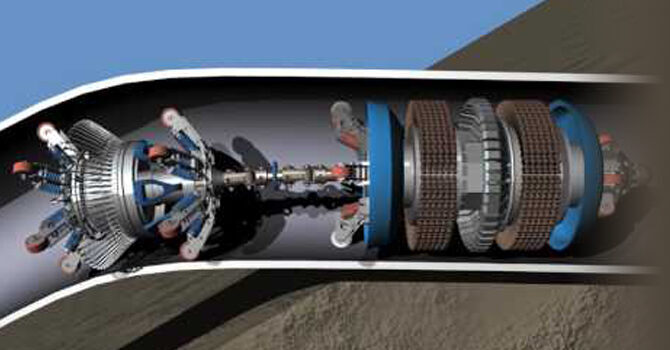
The structural design, operating conditions and location / terrain varies for every pipeline. All of these can present challenges for an ILI tool. Even seemingly small issues experienced during an ILI, such as minor data loss or speed excursions, may introduce uncertainty if their impact is not suitably understood.
The following table summarises several of the common issues we see during ILI runs which may impact data quality. These sources of data degradation are commonly seen for small portions of an ILI run however they can also have a significant impact over the entire pipeline.
| Potential Issue | Consequences |
| All issues can result in a reduction in the overall performance of the ILI tool compared to its published performance specification potentially resulting in:
|
Ultimately, the Pipeline Operator is left with a decision to make:
- Accept the ILI run as successful;
- Reject the ILI run and invoke a re-run clause in the contract or
- Perform a detailed appraisal of the impact of data degradation on the tool performance with respect to the integrity threat prior to making a decision.
Run acceptance is one of the most important stage-gates during an ILI campaign. It is vital to understand how many issues could affect data evaluation and ultimately the credibility of future integrity management decision making. The ILI vendor clearly has a vested interest in the run being accepted, which generally will be linked to invoicing milestones, and in this respect API 1163 2021 states that run acceptance considering the data quality assessment is the responsibility of the Pipeline Operator.
Below are some of the considerations API 1163 recommends when there is incomplete and/or degraded data:
- Are areas of missing data in high or elevated consequence areas?
- Are multiple sensors affected? If so, are they adjacent and is there sensor overlap?
- What is the largest anomaly that could have been missed and what is the criticality of a potential missed anomaly?
- What is the overall effect on the POI and POD both locally and overall?
- Can the missing or degraded data be compensated for? (External inspection in specific areas)
- What is the root cause of the degraded data and would a re-run provide any improvement?
For a large majority of the issues which may be encountered, the decision of whether to accept a run or not comes down to: understanding the specification of the ILI tool; how it is impacted by the data degradation and the impact this will likely have on your understanding of the target integrity threat.
For example, when targeting external stress corrosion cracking (SCC), data degradation at the bottom of the line due to the presence of debris can be a serious issue; it is often coincident with the location on the pipe surface where SCC is most likely to occur due to being a preferential location for coating disbondment. If however, the threat was fatigue cracking, which is generally associated with the seam weld, the issue may not be so much of a problem.
Another key factor comes down to whether obtaining improved data quality is actually achievable – i.e. realistically, does this run provide the best results we are going to get? Although the re-run costs are normally borne by the ILI vendor (assuming the issue is on their side), finding and executing another inspection window can itself result in significant additional organisation, inconvenience and obviously cost. The decision to re-run therefore needs to be taken from a cost-benefit-risk perspective.
Issues such as sensor electronic failures are something that should be resolvable by a re-run, but other factors may not be so controllable. For example, when presented with speed excursions, the flow conditions in many gas pipelines are constrained by demand, meaning that the product cant just be slowed-down for an online inspection. Most ILI vendors offer speed control modules for gas lines and recommend inspecting at times of off-peak demand (e.g. the summer months) but even with these mitigations in place, excursions may not be possible to eradicate.
Clearly, many of these potential run-threats should be addressed in conjunction with the ILI vendor prior to the run, in an attempt to optimise the tool-build and minimise any associated impact. Given that accepting a run can be a stressful and challenging task, Frontline Integrity provide support to operators during this process which can help to make informed decisions and minimize downtime.

How can we help Operators and what value do the Frontline Integrity team add?
Services Offered
Added Value
Inspection data quality risk-assessment based on: the ILI tools selected; the target integrity threat and the likely pipeline inspection conditions to support upfront discussions with ILI vendors and other 3rd parties involved (e.g. specialist pipeline cleaning companies) Development of associated mitigation strategies.
We don’t sell ILI tools, so the information and analysis we give is completed unbiased and targeted at extracting the maximum quality information from the ILI.
Expedited analysis of the run data for speedy decisions regarding the impact of any data degradation on the management of the target integrity threat(s) in line with API 1163 requirements (support run acceptance appraisal, re-run etc.)
Given our experience, we can anticipate potential problems making sure no effort, time and money is wasted due to poor quality ILI runs.
Develop documentation and procedures for ILI run performance evaluation.
Provision of knowledge and expertise for operators to utilise in future ILI campaigns ensuring all future ILI runs are successful and maximised to their full potential.
Get in touch today 😊


