Operator: Offshore Gas Field
Project: Complex Fitness for service assesment
Overview
To support the recent re-commissioning of a ~40-year-old subsea wet gas pipeline system, Frontline integrity were requested to complete a fitness for purpose assessment. The primary objective of the work was to assess all credible integrity threats, identify any areas of uncertainty and develop a suitable action plan which included defining a suitable re-inspection schedule.
The system is old with a complex operational history where various fields diverted gas through the pipeline system. Recently, there have been some modifications to support the re-commissioning and a number of new wells have been flowing through the system.
Location
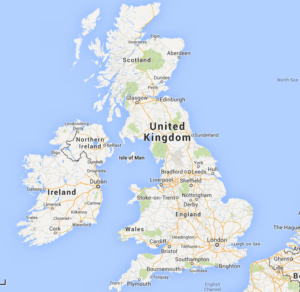
UK - North Sea
Challenges Faced by the Customer
The primary challenges were:
- Historic corrosion models are not representative of recent operation.
- Unclear future operational regime.
- Limited historic ILI data meant matching between datasets was not possible.
- Identification of credible corrosion mechanisms and suitable corrosion growth rates.
- Fluid seabed and constant changes in pipeline spanning.

The Approach
The analysis ensured all available datasets were overlaid to guarantee all reported ILI anomalies were assessed appropriately.
An example of this would be the reported girth weld anomalies as well as the reported spans:
- Are any girth weld anomalies coincident with any areas of spanning?
- Do we understand the quality of the girth welds? If so, can these be assessed confidently?
- Is an anchor drag a credible scenario for any exposed spans?
- What would be tensile and compressive strain capacity limits at these spans under loading?
- Is a failure credible?
The study concluded that internal corrosion is a one of the primary integrity threats. Therefore, our analysis considered the following mechanisms:
- CO₂ corrosion
- Top of Line Corrosion
- H₂S Pitting
- Microbial Induced Corrosion
- Under Deposit Corrosion
- Preferential Weld Corrosion
- Dead Leg Corrosion
This analysis considered recent ILI data alongside all available operational data (e.g. production profiles, chemical injection, product sampling and laboratory analysis) and any reported metal loss was assessed in line with the DNV recommended practices.
For the future integrity assessment, three potential operational scenarios were assumed, and representative corrosion models were derived. The most conservative model was used to determine the recommended re-inspection date.
Results
The work provided:
- Identification of the primary integrity threats.
- Identification of current ILI technology limitations to detect the primary threats and suggested alternatives to improve reliable detection and sizing.
- Provision of multiple future operational growth models and impact on remnant life to support future re-inspection planning.
- Action plan to further investigate any data gaps so various integrity threats can be further investigated or eliminated.