Operator: Slurry Pipeline
Project: PIMS Improvements – Phase 0
Overview
Frontline Integrity were engaged by a pipeline operator to improve the risk management of their concentrate and tailings export pipelines from a major iron ore mine in Central America. The operator did not have a formal Pipeline Integrity Management System (PIMS) in place but performed a number of integrity-related activities as part of their annual maintenance program.
Location
Central America

Challenges Faced by the Customer
The primary challenges were:
- Multiple erosion failures occurring annually, both in bare-steel and rubber lined pipelines.
- Regular extensive sectional replacement to manage the threat of internal erosion with limited condition monitoring capabilities to trend and predict remaining life.
- Risk and risk controls focused on erosion management in the area where the majority of historical failures had occurred. No pigging facilities and limited understanding of pipeline condition outside of these areas for all threats.
- Significant financial, environmental and reputational consequences for the business due to this reactive integrity management approach.
The Approach
Frontline Integrity’s personnel have a unique blend of asset management experience covering the strategic development and implementation of risk-based integrity management systems down to the day-to-day integrity management data collection, data analysis and practical decision-making.
Frontline Integrity led a number of PIMS workshops with the customer to develop a roadmap for the transition from a re-active to a proactive style of integrity management within four weeks. This primarily involved improving the capability to: monitor degradation, predict remaining life and plan local repairs in advance for all threats, not just erosion. The key elements of the roadmap were:
Frontline Integrity led a number of PIMS workshops with the customer to develop a road map for the transition from a reactive to a proactive style of integrity management within four weeks. This primarily involved improving the capability to monitor degradation, predict remaining life and plan local repairs in advance for all threats – not just erosion. The key elements of the roadmap were:
- Collate and align all historical threat knowledge and condition and failure data into a centralised database.
- Develop appropriate threat analysis, risk assessment and risk-based planning (RBI) tools so the customer can target risk controls – and therefore maintenance budgets - to the areas that need it the most. Consideration of all credible pipeline threats, not just erosion.
-
Screening and cost-benefit analysis of a number of additional risk controls related to condition monitoring and design improvements:
- In Line Inspection and its associated infrastructure
- External automated C-Scan
- Guided wave (UT)
- Improved erosion monitoring
- In-line Choke installation to reduce slack-flow and fluid velocities
- Vulcanised rubber liner design improvements (tailings lines) - Define anomaly alert levels, repair criteria and repair procedures.
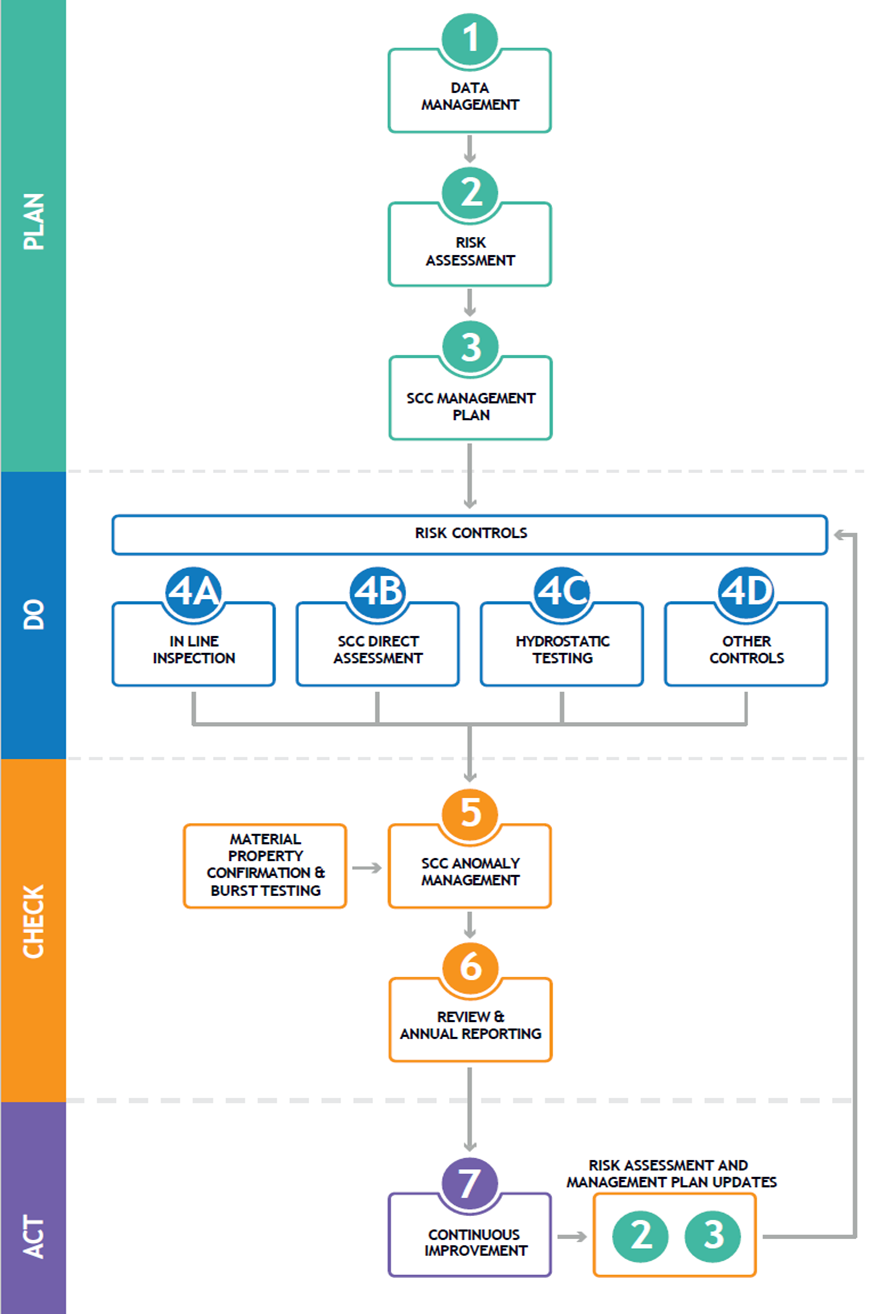
- Implementation of an annual Plan-Do-Check-Act integrity management cycle to ensure consistency in the identification, deployment and performance monitoring of risk controls and associated continuous improvement.
Results

Frontline Integrity is working together with the mining operator to support them with the implementation of the PIMS action plan. The improvements will both save the business money and maximise the availability of the pipeline. This will be achieved through the direct cost-saving associated with avoiding expensive sectional replacements as well as eliminating failures and their associated consequences.